
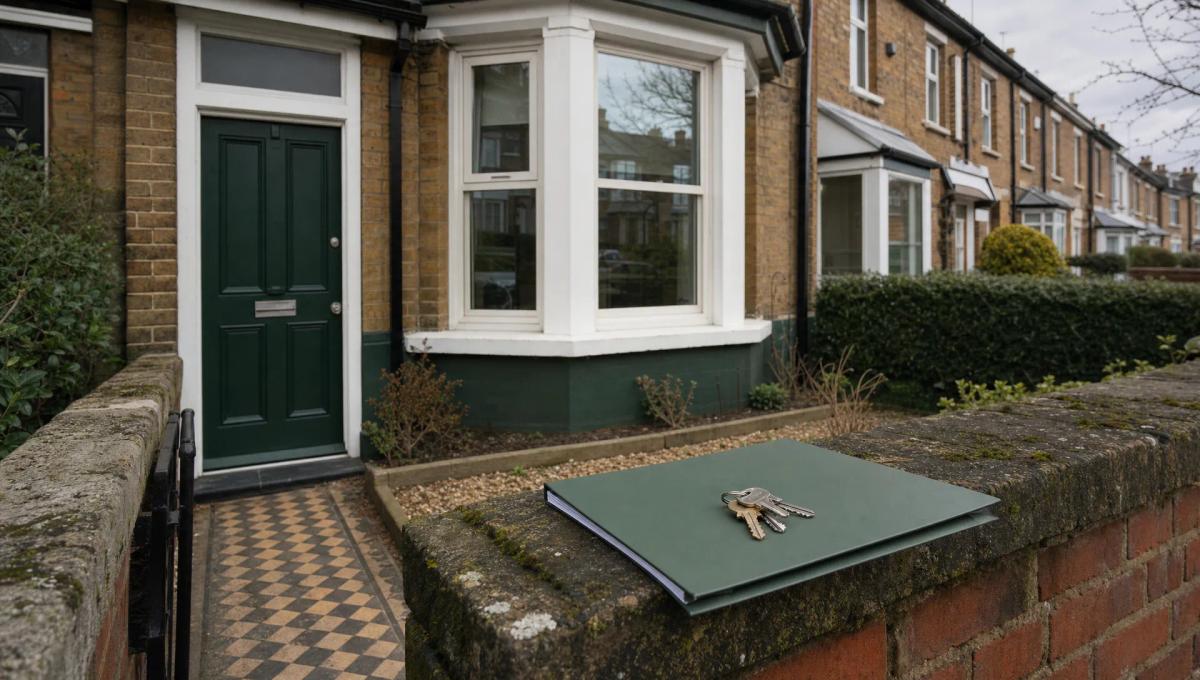
If your home is registered with HM Land Registry, lost title deeds will not stop you selling it. The register itself is the proof of ownership, and your conveyancer simply downloads official copies. Selling a house with lost title deeds only gets harder when the property has never been registered, and even then there is a set process to follow.
This guide explains how to check where you stand in England and Wales, what to do in each case, and how much time to allow.
Is my property registered with HM Land Registry?
Most homes in England and Wales are registered. Registration on sale became compulsory across England and Wales on 1 December 1990, and a new first mortgage has triggered it since April 1998, so most homes that have changed hands or been mortgaged since then are registered. You can check in a few minutes by searching the register on gov.uk with the address. If a title number comes up, the home is registered.
If you search and nothing appears, the property may be unregistered. This is most common where the same family has owned a home for decades without a sale or remortgage.
Selling a house with lost title deeds: registered homes
For a registered home, the deeds that matter are held electronically. Your conveyancer will order:
- The official copy of the register, which shows who owns the property and any mortgages or restrictions
- The title plan, which shows the boundaries
Both are available from HM Land Registry for a small fee listed on gov.uk. You do not need the old paper bundle to complete a sale.
Some older paper documents can still be useful, such as a deed that sets out a right of way or a covenant mentioned on the register but not copied in full. If one is missing, the buyer's solicitor may ask questions or suggest indemnity insurance, which is usually a modest one-off cost.
What if the property is unregistered and the deeds are lost?
An unregistered home has to be registered for the first time when it is sold. Normally that is done from the original deeds, which prove the chain of ownership. If those are lost or destroyed, HM Land Registry can still register the property using other evidence. Its practice guide on first registration where deeds have been lost or destroyed explains what it accepts.
That evidence usually includes:
- A statutory declaration from the owner explaining how long they have owned and lived in the property, and what happened to the deeds
- Any surviving documents, such as old mortgage papers, a copy of the conveyance held by a solicitor or the lender, or a will and grant of probate
- Proof of occupation, such as council tax bills and utility statements over many years
Depending on the evidence, the property may be registered with absolute title or with a lesser class, such as possessory title, which can be upgraded later.
How long does it take?
| Situation | What you need | Typical timescale |
|---|---|---|
| Registered home, paper deeds lost | Official copies from HM Land Registry | Same day online |
| Registered home, missing older document referred to on the register | Search for a copy, or indemnity insurance | Days to a few weeks |
| Unregistered home, deeds held by a solicitor or lender | Retrieve the deeds, then first registration | Weeks |
| Unregistered home, deeds lost or destroyed | Statutory declaration and supporting evidence, then first registration | Often several months |
HM Land Registry processing times change through the year and are published on gov.uk. Your conveyancer can tell you the current wait.
Where might the original deeds be?
Before starting a lost-deeds application, it is worth checking the obvious places:
- The solicitor who handled the purchase, or the firm that took it over
- Your current or former mortgage lender, which often kept deeds as security
- A bank safe deposit or the family's papers, especially after a death
- The Law Society's Find a Solicitor service, to trace a firm that has closed or merged
Can I still sell quickly if the deeds are missing?
Yes, if the home is registered, because the paperwork side is no slower than any other sale. If it is unregistered, start the registration work as early as possible, and tell any buyer or agent up front. A buyer who knows the timeline is less likely to pull out.
If missing deeds are one of several problems with a sale, such as arrears, a probate delay or a property that is hard to mortgage, read about selling a problem property to see the options.
FAQs
Do I need the original title deeds to sell my house?
Not if the home is registered. Official copies of the register and title plan from HM Land Registry are what the buyer's solicitor relies on.
How do I get a copy of my title deeds?
Search the register on gov.uk using your address and download the official copy of the register and the title plan for a small fee.
What happens if my house is not registered and the deeds are lost?
Your conveyancer applies for first registration with a statutory declaration and any surviving evidence. HM Land Registry may grant absolute or possessory title.
Can a buyer refuse to buy because of missing deeds?
A buyer can ask for more evidence or insurance, and some will wait for registration to finish. Clear information early reduces that risk.
Who pays for registering an unregistered property?
Usually the seller, because the property needs to be registered before or as part of the sale. Ask your conveyancer for a quote before you start.
Sources: gov.uk guidance on getting copies of deeds and searching the register; HM Land Registry information services fees; HM Land Registry practice guide on first registration where deeds have been lost or destroyed; practice guide 11 on official copies.